
Value
- To consolidate and strengthen the ethics emanating from the true Islamic religion and academic practices.
- Creative leadership through excellence, responsibility, creativity and the spirit of teamwork.
Dear colleagues, staff, and students, and other respected (this) homepage viewers ... Salam Alaikum
As the head of the Vice-Deanship for Graduate Studies and Scientific Research (VD4GS & SR) at the College of Computer Science and Information (CCIS), I want to state following statements for communication between VD4GS & SR and its employees in one side, and the departments, faculty members, students and postgraduate students at CCIS in the other side. First of all, we want to emphasize that this VD4GS & SR is serving important ingredients in our college which are the various graduate programs, departments that provide these programs, professors who carry out the academic, teaching and supervision of our students, and the last (but not the least) our male and female students. Also, VD4GS & SR may be considered as the link between these mentioned CCIS sectors and the deanship of CCIS and the Deanship of Graduate Studies (DGS) at the university. In addition to that, the VD4GS & SR mission is to support and organize scientific research and coordination between departments, professors and graduate students in benefiting from the university's support for scientific research granted and supervised by the Deanship of Scientific Research (DSR) and the Vice Rectorate for Graduate Studies and Scientific Research (VRGSSR).
The goals of VD4GS & SR and CCSI academic departments are to implement, organize, develop, and interpret university and the college bylaws and regulations for the sake of enhancing the quality and benefit of each of the graduate programs and scientific research. Also this will fruit in the positive direction of what the college and university are targeting with respect to academic and institutional accreditation. Therefore, we have designed VD4GS & SR website to contain all the regulations, templates, and announcements supplied by departments, CCIS, and DGS for staff and students. The regulations, templates, and advertisements will be continuously updated and managed so that they are easily accessible to everyone, whether they are departments, professors, students or students. In addition to the phone numbers of the college and VD4GS & SR,
We would like to appreciate the vice rector of VRGSSR and deans of CCSIS and DGS for their unlimited support to raise the quality of graduate studies in the college to the degree that the university aspires to. We would also like to thank our colleagues (vice deans and department heads) for their support and participation in our humble efforts to carry out the mission required by VD4GS & SR in accordance with the university bylaws and regulations. We will never hesitate to open our ears, eyes, and minds to receive and react upon to any suggestions, criticisms, or corrections that arrive at the VD4GS & SR either from the deanship of CCIS, DGS, departments, professors, and / or graduate students in the college. Finaly, I would like to thank everyone who is working in the VD4GS & SR, whether they are members of committees, employees, technicians, or graduate students. We wish all of us the useful knowledge and success and Allah (swt) is the guide to the correct path.
Muna Saleh Al-Razgan
The College of Computer and Information Sciences aspires to achieve leadership and excellence in graduate studies and scientific research, driving it to adopt best practices in education, research, and innovation. The Vice-Deanship for Graduate Studies and Scientific Research is responsible for overseeing educational, academic, and research activities for graduate students. It supervises the college’s efforts to enhance its research capabilities, aiming to position the college as a distinguished scientific platform that offers knowledge and innovation at a high level of quality. Furthermore, the Vice-Deanship works on developing the college’s graduate programs in line with local and global standards and provides support to academic departments to enhance their research programs. We are committed to providing an integrated educational and research environment that enables students and researchers to reach their full potential and contribute to enriching scientific knowledge. This effort strengthens the university’s role in offering innovative and impactful solutions that contribute to societal development.
Dr. Isra Al-Turaiki
The Computer Science department has 5 main segments in terms of administering its work. Those segments are Accreditation, Manpower, Graduate Studies, and undergraduate program Core activities.
Each of the main segments is composed of a number of committees and a steering & follow up committees as shown in the Figure:
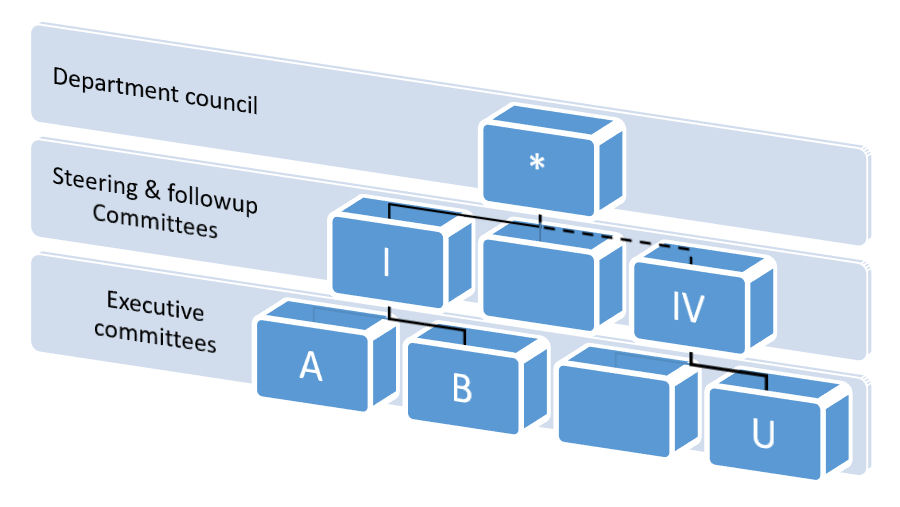
Figure 1: Three level Hierarchical structure of the CS department committees
| 1. Steering and follow up | |
|---|---|
| Prof. Hatim AboAlsamh | Head |
| Dr. A. Almegrin | Vice |
|
Head of the QMS cmte |
|
| 2. EEC-HES | |
|---|---|
| Dr. M. M. Ben Ismail | Head |
|
Dr. A. Soudani |
|
| 3. ABET | |
|---|---|
| Dr. S. Qasem | Head |
|
Dr. M. Saif |
|
| 4. QMS | |
|---|---|
| Dr. M. Maher Ben Ismail | Head |
|
Dr. O. Bchir |
|
| 5. Dept. Annual report | |
|---|---|
| Dr. A. Azami | Head |
|
Dr. O.Alsaleh |
|
| 6. Alumni | |
|---|---|
| Dr. A. Artoli | Head |
|
Dr. I. Alrassn |
|
| Dr. M. Al-Rodhan | Head |
|---|---|
|
Dr. G. Matouk |
| 1. Steering and follow up | |
|---|---|
| Prof. Hatim AboAlsamh | Head |
|
Head of PhD cmte |
|
| 2. PhD cmte | |
|---|---|
| Prof. Menai | Head |
|
Prof. A. Aldhelaan
|
|
| 3. Master (Regular) | |
|---|---|
| Dr. M. Hosny | Head |
|
Dr. A. Belghith |
|
| 4. Master (Parallel) | |
|---|---|
| Prof. Hatim AboAlsamh | Head |
|
Prof. Hassan Mathkour |
|
| 1. Steering and follow-up | |
|---|---|
| Prof. H. Aboalsamh | Head |
|
prof. M. Menai |
|
| i. Algorithm and computation | |
|---|---|
| Dr. A. Azami Dr. A. Artoli Prof. A. Belgith |
|
| ii. AI | |
|---|---|
| Dr. M. Menai Dr. K. Al Hindi Dr. S. Kerrach |
|
| iii. Networking | |
|---|---|
| Dr. A. Soudani Dr. M. Alrodhan |
|
| iv. Software Engineering | |
|---|---|
| Dr. S. Hammami Dr. S. Qasem |
|
| v. Database | |
|---|---|
| Dr. A. Touir Dr. S. Gannouni |
|
| vi. Image Processing and Pattern Recognition | |
|---|---|
| Prof. M. Hussain Dr. M. Berbar |
|
| 1. Steering and follow-up | |
|---|---|
| Prof. A. Alsalman | Head |
| Head of the Committees | |
| 2. Scheduling | |
|---|---|
| Dr. S. Hammami | Head |
| Dr. H. Benhidour | |
| 3. Development | |
|---|---|
| Dr. S. Alahmadi | Head |
| Dr. M. Almeshaikeh Dr. H. Kurdi |
|
| 4. B.S. Curriculum | |
|---|---|
| Dr. S. Gannouni | Head |
| Dr. S. Kerrach | |
| 5. Training | |
|---|---|
| Dr. H. AlAied | Head |
| Dr. S. Hammami | |
| 6. Graduation projects | |
|---|---|
| Dr. A. El Allali | Head |
| Dr. M. Alhosaini Dr. M. Aldhelaan Dr. Najla Dr. Mazen Dr. F. Alsulaiman |
|
| 7. Facilities & equipment | |
|---|---|
| Dr. M. Alhosaini | Head |
| Dr. H. AlAied Dr. A. Abdullatif Dr. Tian |
|
An internationally leading academic model in computer science.
To prepare highly qualified professionals in Computer Science for an efficient contribution to the edification of the knowledge society and to the achievement of the national development goals through fostering an academic environment ideal for knowledge development, research, and innovation in the field of Computer Science.
| The B.Sc. program in Software Engineering is accredited by the Engineering Accreditation Commission of ABET | https://www.abet.org |
| The B.Sc. program In Software Engineering is professionally accredited by the Education & Training Evaluation Commission (ETEC) |   |
| The B.Sc. program in Software Engineering is Professionally accredited by The Saudi Council of Engineers |  |
مسمى الدرجة | القبول | متطلبات الدرجة | المسار العام: خطة الدراسة - المقررات | شبكات: خطة الدراسة - المقررات
Master of Science in Computer Engineering
| المستوى الأول | ||
|---|---|---|
| رقم المقرر | مسمى المقرر | الساعات المعتمدة |
| 521 هال | عمارة الحاسبات المتقدمة | 3 (3+0+0) |
| 531 هال | شبكات الحاسب | 3 (3+0+0) |
| المجموع | 6 | |
| المستوى الثاني | ||
|---|---|---|
| رقم المقرر | مسمى المقرر | الساعات المعتمدة |
| 543 هال | معالجة الإشارات الرقمية | 3 (3+0+0) |
| - | يطرح القسم مادة اختيارية | 3 (3+0+0) |
| المجموع | 6 | |
| المستوى الثالث | ||
|---|---|---|
| رقم المقرر | مسمى المقرر | الساعات المعتمدة |
| 591 هال | ندوة في هندسة الحاسب | 1 (1+0+0) |
| - | يطرح القسم مادة اختيارية | 3 (3+0+0) |
| - | يطرح القسم مادة اختيارية | 3 (3+0+0) |
| المجموع | 7 | |
| المستوى الرابع | ||
|---|---|---|
| رقم المقرر | مسمى المقرر | الساعات المعتمدة |
| 592 هال | دراسة مستقلة | 2 (2+0+0) |
| - | يطرح القسم مادة اختيارية | 3 (3+0+0) |
| المجموع | 5 | |
| المستوى الخامس | ||
|---|---|---|
| رقم المقرر | مسمى المقرر | الساعات المعتمدة |
| 600 هال | الرسالة | - |
| المجموع | - | |
| مقررات إجبارية (12 ساعة معتمدة بالإضافة الى الرسالة) | |||
|---|---|---|---|
| رقم المقرر | مسمى المقرر | الساعات المعتمدة | تطرح في |
| 521 هال | عمارة الحاسبات المتقدمة | 3 (3+0+0) | الفصل الأول و الثاني |
| 531 هال | شبكات الحاسب | 3 (3+0+0) | الفصل الأول و الثاني |
| 543 هال | معالجة الإشارات الرقمية | 3 (3+0+0) | الفصل الأول و الثاني |
| 591 هال | ندوة في هندسة الحاسب | 1 (1+0+0) | الفصل الثاني |
| 592 هال | دراسة مستقلة | 2 (2+0+0) | الفصل الأول و الثاني |
| 600 هال | الرسالة | - | الفصل الأول و الثاني |
| المجموع | 12 | ||
مقررات اختيارية: يدرس الطالب 4 مقررات اختياريةيطرحها القسم من القائمة التالية (12 ساعة معتمدة) : | |||
|---|---|---|---|
| رقم المقرر | مسمى المقرر | الساعات المعتمدة | تطرح في |
| 501 هال | المحاكاة ونظرية الصفوف | 3 (3+0+0) | الفصل الأول و الثاني |
| 522 (519) هال | المعالجة الحسابية في الحاسب | 3 (3+0+0) | الفصل الأول |
| 520 هال | المعالجة المتوازية | 3 (3+0+0) | الفصل الثاني |
| 529 هال | موضوعات مختارة في عمارة الحاسبات | 3 (3+0+0) | |
| 536 هال | مداولات الإنترنت وبيئة تي سي بي/آي بي | 3 (3+0+0) | الفصل الثاني |
| 537 هال | مداولات الشبكات المحلية وأداؤها | 3 (3+0+0) | الفصل الأول |
| 538 هال | الشبكات المحلية والمدنية اللاسلكية | 3 (3+0+0) | الفصل الثاني |
| 545 هال | المعالجة الرقمية للصور | 3 (3+0+0) | الفصل الأول |
| 547 هال | المعالجة الرقمية للكلام | 3 (3+0+0) | الفصل الثاني |
| 551 هال | الروبوتية | 3 (3+0+0) | |
| 556 هال | الأنظمة الذكية | 3 (3+0+0) | الفصل الأول و الثاني |
| 585 هال | أمن الحاسب والشبكات | 3 (3+0+0) | الفصل الأول |
| 523 عال | نظم تشغيل يونكس الموزع | 3 (3+0+0) | |
| 575 كهر | اتصالات الجوال | 3 (3+0+0) | |
| المجموع | 12 (4 مقررات) | ||
تم إيقاف القبول في هذا المسار بداية من الفصل الأول من العام الدراسي 1437-1438 هـ
| المستوى الأول | ||
|---|---|---|
| رقم المقرر | مسمى المقرر | الساعات المعتمدة |
| 501 هال | المحاكاة ونظرية الصفوف | 3 (3+0+0) |
| 531 هال | شبكات الحاسب | 3 (3+0+0) |
| المجموع | 6 | |
| المستوى الثاني | ||
|---|---|---|
| رقم المقرر | مسمى المقرر | الساعات المعتمدة |
| 537 هال | مداولات الشبكات المحلية وأدائها | 3 (3+0+0) |
| - | يطرح القسم مادة اختيارية | 3 (3+0+0) |
| المجموع | 6 | |
| المستوى الثالث | ||
|---|---|---|
| رقم المقرر | مسمى المقرر | الساعات المعتمدة |
| 591 هال | ندوة في هندسة الحاسب | 1 (1+0+0) |
| - | يطرح القسم مادة اختيارية | 3 (3+0+0) |
| - | يطرح القسم مادة اختيارية | 3 (3+0+0) |
| المجموع | 7 | |
| المستوى الرابع | ||
|---|---|---|
| رقم المقرر | مسمى المقرر | الساعات المعتمدة |
| 592 هال | دراسة مستقلة | 2 (2+0+0) |
| - | يطرح القسم مادة اختيارية | 3 (3+0+0) |
| المجموع | 5 | |
| المستوى الخامس | ||
|---|---|---|
| رقم المقرر | مسمى المقرر | الساعات المعتمدة |
| 600 هال | الرسالة | - |
| المجموع | - | |
| مقررات إجبارية (12 ساعة معتمدة بالإضافة الى الرسالة) | |||
|---|---|---|---|
| رقم المقرر | مسمى المقرر | الساعات المعتمدة | تطرح في |
| 501 هال | المحاكاة ونظرية الصفوف | 3 (3+0+0) | الفصل الأول و الثاني |
| 531 هال | شبكات الحاسب | 3 (3+0+0) | الفصل الأول و الثاني |
| 537 هال | مداولات الشبكات المحلية وأدائها | 3 (3+0+0) | الفصل الأول |
| 591 هال | ندوة في هندسة الحاسب | 1 (1+0+0) | الفصل الثاني |
| 592 هال | دراسة مستقلة | 2 (2+0+0) | الفصل الأول و الثاني |
| 600 هال | الرسالة | - | الفصل الأول و الثاني |
| المجموع | 12 | ||
مقررات اختيارية: يدرس الطالب 4 مقررات اختياريةيطرحها القسم من القائمة التالية (12 ساعة معتمدة) : | |||
|---|---|---|---|
| رقم المقرر | مسمى المقرر | الساعات المعتمدة | تطرح في |
| 521 هال | عمارة الحاسبات المتقدمة | 3 (3+0+0) | الفصل الأول و الثاني |
| 539 هال | موضوعات مختارة في شبكات الحاسب | 3 (3+0+0) | |
| 536 هال | مداولات الإنترنت وبيئة تي سي بي/آي بي | 3 (3+0+0) | الفصل الثاني |
| 543 هال | معالجة الإشارات الرقمية | 3 (3+0+0) | الفصل الأول و الثاني |
| 538 هال | الشبكات المحلية والمدنية اللاسلكية | 3 (3+0+0) | الفصل الثاني |
| 585 هال | أمن الحاسب والشبكات | 3 (3+0+0) | الفصل الأول |
| 523 عال | نظم تشغيل يونكس الموزع | 3 (3+0+0) | |
| 575 كهر | اتصالات الجوال | 3 (3+0+0) | |
| المجموع | 12 (4 مقررات) | ||
In this page, we list events and activities that are open to CCIS faculty and staff. The events dates and topics are shown in the table below:
Academic Year 2016-2017
|
Date |
Location |
Event |
Title |
Speaker |
|---|---|---|---|---|
|
Monday, October 31,2016, from 12-1 pm.
|
CCIS auditorium |
Guest Lecture |
|
Eng. Ahmed Almunify (PMP, IT project manager at Elm company). Eng. Ahmed is one of the department alumni. |
|
Sunday, November 6, 2016, from 12-1 pm. |
CCIS auditorium |
Guest Lecture |
|
SOWN Financial Advisory. |
|
Tuesday November 26th , 2016 |
F8 |
Technical course |
|
Sadeem Alsudais, Lecturer, SWE department. |
|
Thursday, December 1st, 2016, from 12-1 pm. |
CCIS auditorium |
Workshop |
|
Eng. Abobakr Y. Shahrah |
|
6-7 December, 2016 |
C4ICAS lab. |
Technical course |
|
Eng. Yazeed Albosais, Founder of Qalim Company and web developer in KidsAppCenter |
|
Tuesday 13 December, 2016, from 12-1. |
F8 |
Technical session |
|
Sadeem Alsudais, Lecturer, SWE department. |
|
Monday 12, December , 2016, from 12-1 pm. |
F8 |
Technical session |
-Repository hosting service. - Version Control. - Code management |
Sadeem Alsudais, Lecturer, SWE department. |
|
Sunday 25, December, 2016, from 12-1 pm. |
F8 |
Technical session |
- Content delivery. - Hosting web pages. - database storage. |
Sadeem Alsudais, Lecturer, SWE department. |
 Software Construction Clinic
The Software Engineering Department launched a Software Construction Clinic at the start of the fall semester (2016). The goals of this clinic are to be unique, solid, and adaptable to help students learn about software construction, principles, and philosophy. It emphasizes the software development lifecycle, including process orientation, methodologies, and best practices. It also helps students explore the latest technologies, such as Cloud Computing, Mobile Computing, virtual environments, Data Analytics, Social Media, Internet of Things, and more. The department established this clinic with the vision of encouraging students to be self-motivated, independent learners, team players, and innovators. The aim is to prepare students well for the demands of the market.
For more information, follow us on Twitter: